

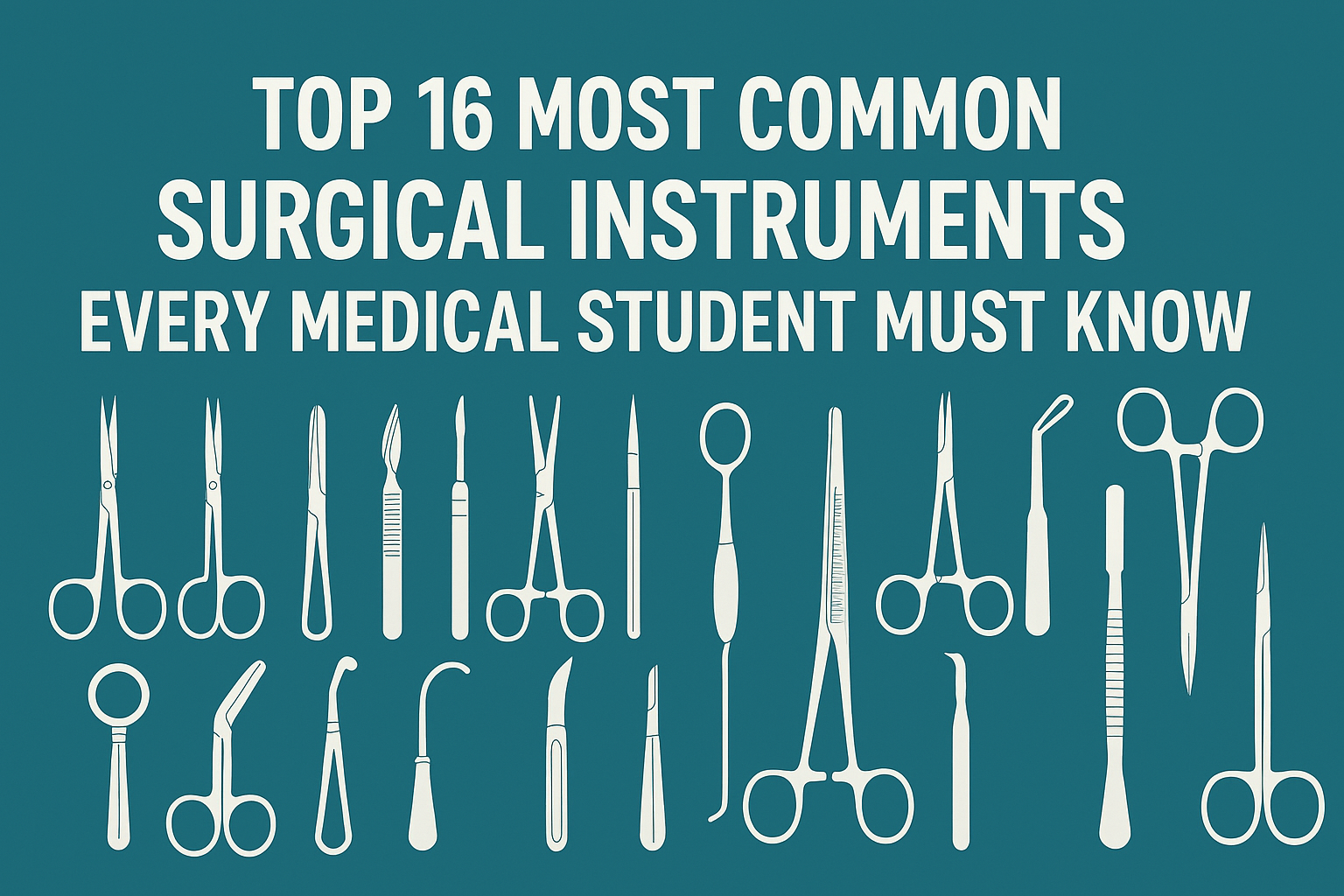
Understanding surgical instruments is one of the most important foundations for every medical student stepping into the operating room.
What are surgical instruments?
The surgical instruments are the specialized medical tools designed to help surgeons perform precise and controlled procedures during operations.
These instruments help in cutting, dissecting, holding, clamping, suturing and monitoring tissues with utmost accuracy.
Made with the best quality sterile materials, these instruments ensure safety, durability and hygiene in the operating room. From basic tools like scalpels, scissors and forceps to advanced devices like retractors, laparoscopic instruments and electrosurgical units, every instrument plays a key role in improving surgical efficiency and patient outcomes.
Why must medical students know the surgical instruments?
Knowing the surgical tools improves OT confidence, minimizes errors and prepares students for clinical postings and future surgical rotations. The knowledge also increases teamwork and communication with surgeons and nurses, making surgery smoother and more efficient.
Here is the guide to the top-most commonly used stainless steel surgical instruments for hospitals.
- Scalpels and Blades: Scalpels are the primary cutting tools used to make surgical incisions. The most common handles – No.3 and 4 hold blades like 10, 11 and 15, each designed for specific tasks- blade 10 for general skin incisions, 11 for stab incisions and 15 for fine, delicate cuts. These instruments allow surgeons to begin operations with accuracy. The best surgical instruments suppliers in India manufacture and export premium-quality scalpels.
- Surgical Scissors: They are of various types, including Mayo, Metzenbaum, Iris and operating scissors. Mayo scissors are strong and used for cutting thick tissues or sutures. Metzenbaum scissors are long and delicate for soft-tissue dissection, Iris scissors handle fine work and operating scissors are used for general cutting. Every type offers different levels of control and precision. The best manufacturers supply premium-quality surgical scissors for surgeons.
- Forceps: Forceps help grasp, hold or manipulate tissues during surgery. Adson forceps are used for skin handling, while tissue forceps and dressing forceps secure structures without damaging them. They allow delicate operations and controlled movements inside the surgical field.
- Hemostats and Clamps: Hemostatic instruments are designed to control bleeding by clamping blood vessels. Smaller hemostats handle tiny bleeders, while the larger clamps secure bigger vessels. Their serrated jaws ensure a firm hold, making them important in nearly every surgery. The custom-made surgical instruments factory delivers the best quality hemostats.
- Self-Retaining and Handled Retractors: Retractors help expose surgical areas by holding tissues apart. Self-retaining retractors stay open on their own, freeing the surgeon’s hands, while handheld retractors need help. They improve visibility and create a safe working space inside deep cavities.
- Atraumatic Holding Instruments: These instruments help hold tissues without excessive damage. The Babcock forceps handle soft structures like bowel and ovaries. Allis forceps grip tougher tissues, and Kocher clamps secure firm or slippery structures. They support tissue control without unwanted trauma.
- Towel and Drape Clamps: The towel clamps are used to secure drapes to the patient’s skin, preventing movement during procedures. Their sharp tips hold firmly, ensuring a clean and stable surgical field. These clamps play a small but important role in maintaining sterility.
- Suction Instruments: These surgical instruments remove blood and fluids to keep the surgical field clear. These tools maintain visibility and safety. The supplier of affordable surgical instruments for medical colleges and healthcare amenities delivers the best quality suction instruments at the best price.
- Needle Holders: Needle holders provide a secure grip for suturing needles. They allow precise needle control during wound closure, anastomosis, and internal stitching. These instruments speed up the suturing work by reducing instrument changes.
- Suturing and Stapling Tools: Skin Staplers, staple removers and suture removal scissors support efficient wound closure and postoperative care. The staplers close long incisions, removers extract staples without harming skin and suture removal scissors safely cut stitches. They streamline closure and healing processes.
- Soft Tissue holding instruments: These tools help handle soft tissues and absorb fluids. Their atraumatic design allows safe use during prepping, cleaning or holding delicate structures. They are commonly used in general, gynaecological and obstetric surgeries.
- Probes and Dilators: Probes with eyes explore tracts, sinuses or fistulas while dilatators gradually widen the cervix. These instruments help in diagnostic and gynaecological procedures by providing controlled access and assessment of internal pathways. The OEM surgical instrument manufacturers manufacture and export the customized probes and dilators aligned with the requirements.
- Gynecological Instruments: The gynecological instruments provide visualization of the vaginal canal and cervix. The Tenaculum hooks stabilize the cervix during procedures, and uterine sounds measure uterine depth. These tools make pelvic examinations and procedures safe and effective.
- Bone –Cutting Instruments: They are used to cut bones, refine bony surfaces, shape or split bone, and deliver controlled force. These instruments allow precise bone work during major operations. The dedicated disposable surgical instruments supplier near me manufactures bone-cutting instruments aligned with the medical norms.
- Abdominal and Deep Retractors: The retractors provide deep exposure inside the abdomen. They offer stable and deep retraction and can be bent to fit anatomical curves, and are ideal for abdominal walls and organs. These surgical tools create space for safe surgical manipulation.
- Laparotomy Instruments: These tools are used in open abdominal surgeries. Their self-retaining design opens the abdominal cavity widely, giving surgeons full access without needing help. This makes it indispensable in major operations.
How to choose the right quality surgical instruments?
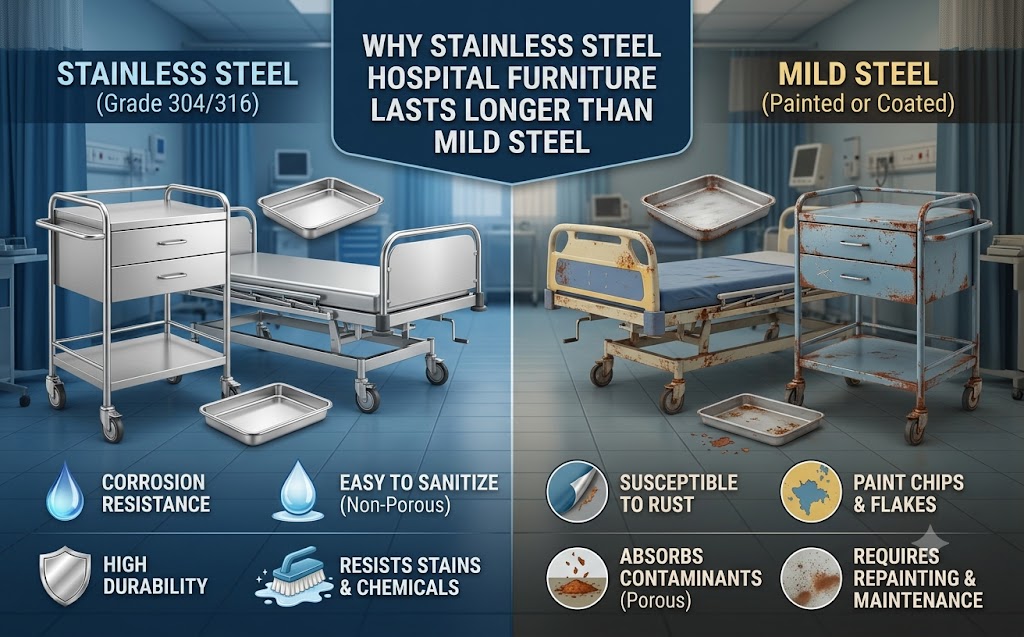
- Opt for medical-grade stainless steel
- Ensure rust, corrosion and stain resistance
- Look for smooth joints and precise alignment
- Test grip, balance and tension
- Check the bulk surgical instruments wholesale price
- Verify autoclavability and durability
Every surgical instrument has a specific purpose. Understanding these instruments helps the students communicate better with the surgical team and build confidence during clinical postings. When planning to buy surgical instruments online, work with a reputable manufacturer or supplier for the best quality, medical-grade and durable tools.
FAQs
- How to know if the surgical instrument is of good quality?
Check medical-grade stainless steel, smooth joints, proper alignment and CE/ISO certification. United Poly offers the best quality surgical instruments at a competitive price. - How often should the surgical instruments be replaced?
With proper sterilization and maintenance, the best quality instruments can last for years. Damaged or misaligned tools must be replaced immediately. - Are United Poly surgical instruments autoclavable?
Yes, United Poly surgical tools are autoclavable and can withstand high heat and steam, preventing infection and maintaining long-term durability. Contact the team to understand the reusable surgical instrument set price list and other details.